Most companies do not choose the multi-supplier model intentionally. They arrive at it. One supplier for apparel because they did the uniform, another for print because they were cheap on brochures, someone’s contact for exhibition stands, and a forth for whatever nobody else could do. It works, in the sense that things arrive.
The cost shows up somewhere other than the invoice. This guide compares the two models on the things that actually differ: brand consistency, admin time, lead times, price visibility, stock and reporting. It also covers the cases where using more than one supplier is genuinely the right answer, because there are some.
What Each Model Actually Looks Like
The multi-supplier model: Each requirement is sourced separately. Someone identifies a need, gets quotes, raises a purchase order, supplies artwork, approves a proof, chases delivery and files the invoice. Repeat per item, per supplier, per order. Artwork lives in email threads. Stock lives in whichever cupboard has room, and the branding often looks slightly different between each supplier.
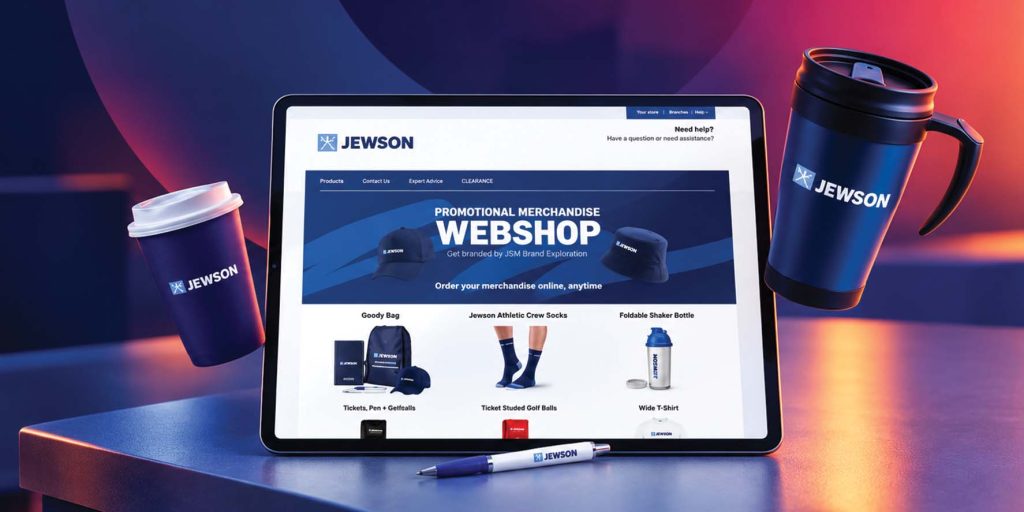
The consolidated model: An approved range sits behind a corporate webshop. Stock is held and replenished buy the supplier. Teams, regions or franchisees order from the range themselves, within permissions you set. Artwork is held once and applied consistency, with no subtle differences. Reporting comes out of one system.
Where the Mult-supplier Model Costs You
Admin time, which nobody measures. A single merchandise order involves quoting, PO raising, artwork transfer, proof approval, delivery chasing and invoice processing. Multiply that by the number of orders your organisation places in a year, then by the number of people placing them. This is usually the largest hidden cost and the hardest to see, because it is spread thinly across people whose job title is not merchandise.
Brand drift. Different suppliers reproduce colour differently. Embroidery thread, pad print, screen print. and laser engraving all render a brand colour differently, and each supplier has their own idea of “close enough” Items ordered eighteen months apart stop matching. Nobody notices until they are side by side where the branding is starting to stand out, from it’s inconsistencies.
No price visibility. When orders are placed separately, each gets priced at a one off order. Without a clear view of your organisation’s total spend in that category, it’s difficult to know whether the quoted price reflects what you could achieve if you consolidated to just one merchandise supplier.
Deadline risk multiplies. A kit assembled from four suppliers has four lead times, four production queues and four chances to be late. The kit is only as fast as its slowest component, and no supplier owns the whole thing. This is risky when trying to reach a tight deadline.
Stock nobody controls. Leftovers from one order sit in a store room. The next order gets placed without knowing what’s actually left over. Meanwhile something essential runs out mid-campaign because stock wasn’t planned for effectively.
No data. When someone senior asks what the organisation spends on merchandise, or which items actually get used, the honest answer is a rough guess assembled from purchase ledger keyword searches, and not actually back up by proper data.
Where multiple suppliers genuinely make sense
This is not a case of one model being right in every situation.
• Highly specialised one-offs. A bespoke exhibition build or a specialist technical product may sit outside any general merchandise supplier’s capability, and that is fine.
• Local sourcing for genuine reasons. International sites with local language, compliance or customs requirements sometimes need local supply, though a partner with global distribution can often absorb this.
• Genuine risk management at very high volume. If merchandise is business-critical at scale, dual sourcing on core lines is a reasonable procurement position.
• Before you have the volume. If you place three or four orders a year, a consolidated programme is more structured than the requirement needs. There is more on that in the next article.
The two models side by side
| Dimension | Multiple suppliers | Consolidated webshop and fulfilment |
| Brand consistency | Varies by supplier and by order; drift over time | One artwork source, one decoration standard |
| Admin per order | Full cycle each time: quote, PO, artwork, proof, chase | Order raised from an approved range in minutes |
| Lead time | As slow as the slowest supplier in the kit | Held stock ships immediately; production only for new lines |
| Price visibility | Priced per order, no view of total spend | Priced against consolidated volume, visible by cost centre |
| Stock | Held ad hoc wherever there is space | Managed and replenished by the supplier |
| Accountability | Shared, which in practice means nobody | One partner owns the outcome |
| Reporting | Reconstructed from invoices | Reporting by user, department, region and item |
| Distribution | Each supplier ships separately | Consolidated picking, kitting and worldwide shipping |
| Best suited to | Low frequency, highly specialised requirements | Repeat ordering, multiple locations, multiple order-raisers |
The switching cost, honestly
Consolidating is not free. You will spend time agreeing an approved range, supplying brand assets properly, deciding permissions and spend limits, and getting sign-off from procurement and brand. Expect that to take a few weeks of intermittent effort rather than an afternoon.
There is also a genuine trade-off. A curated range means someone occasionally cannot order the specific thing they had in mind. That is the point, and it is also the part that generates the most internal friction in the first few months. It is worth being upfront about that with stakeholders rather than presenting consolidation as pure upside.
What to ask before you consolidate
Quick checklist: questions for a consolidated supplier
- ✓ Which decoration happens in-house, and which is subcontracted?
- ✓Where is stock held, and who pays for it?
- ✓What happens to unsold stock at the end of a programme?
- ✓Can you ship to home addresses as well as sites, and to which countries?
- ✓Who owns a missed deadline, and what is the remedy?
- ✓Can the webshop enforce budgets, approvals and user-level permissions?
- ✓What is the notice period, and do we own our artwork and data if we leave?
How JSM runs this for a client
Howdens:
Howdens needed branded National Trade Day packs in every one of its 850 depots, and needed them inside a two-week turnaround. That is not a job you can split across four suppliers and hope the timings line up. Because design, decoration, print, kitting and distribution all sit under one roof, the whole programme was produced and distributed as a single piece of work. To the required deadline.
What the consolidated model looks like day to day
• A requirement comes up. Whoever owns it orders from the approved range rather than starting a sourcing exercise.
• Held stock is picked, kitted if needed, and shipped to a site, a depot or an employee’s home.
• Sizes, quantities and small personalisation are handled as part of the order rather than as a manual back-and-forth.
• Replenishment is the supplier’s job, triggered by stock levels rather than by someone remembering.
• Spend is visible by cost centre without anyone building a spreadsheet.
Because decoration and print happen in-house, there is no third party in the middle when a deadline tightens. That is usually where the multi-supplier model breaks, and where consolidation pays for itself.
FAQ’s
Is a single merchandise supplier riskier than several?
It concentrates the relationship, so it deserves proper due diligence: production capability, stockholding, financial stability and a clear remedy if something is late. But the multi-supplier model has its own risk, spread thinly and largely unmanaged. Four suppliers means four sets of quality control, four lead times and no single owner when something goes wrong. Which can get messy quickly.
Will consolidating cost more per item?
Usually less, because your total category volume is visible and can be priced accordingly, and because held stock removes repeated setup and short-run charges. Where a specialist supplier beats a consolidated price on one specific product, that is worth keeping as an exception rather than a reason to keep the whole model.
How long does it take to set up a corporate webshop?
The build itself is quick. The time goes into agreeing the range, brand assets, permissions and approvals internally. Plan for a few weeks and start with a tight range, you can then expand the selection down the line.
Do we have to move everything at once?
No, and it is usually better not to. Start with the highest-frequency, most repeatable category, typically onboarding packs or core apparel. Prove the model there, then extend.
Ready to stop juggling suppliers?
We will help you build an approved range, hold the stock, and give your teams one place to order from.