New Starter Kits and Employee Onboarding Packs: What to Include
A new starter kit is often the first physical thing an employee receives from a company they’ve just joined, before their first meeting and sometimes before their first day. Get it right and it quietly signals that the organisation is well-run. Getting it wrong with mismatched branding, missing items, and nothing for remote hires undercuts the welcome before it’s even begun.
This guide covers what to actually include, how to handle office versus remote starters differently, typical budgets, and how to stop onboarding kits becoming an ad hoc admin job for HR every time someone joins.
What is a new starter kit or onboarding pack?
A new starter kit (or employee onboarding pack) is a set of branded items given to a new hire at or before their start date, typically combining practical items, welcome touches, and company-branded merchandise. It’s usually the same core set that every new hire receives, sometimes with small variations for role, seniority, or work location, and it is often the new employee’s first tangible contact with the company brand.
Done well, it does three jobs at once. It’s practical (useful items, not clutter), it reinforces brand consistency from day one, and it signals to a new hire that they’ve joined an organisation that plans ahead.
What to include in a new starter kit
There’s no single correct list, but most well-run kits draw from four categories.
Essentials
- Company handbook or first-day information (printed or as a card with a QR link)
- ID badge or lanyard, if applicable
- A welcome card, ideally signed or personalised with the new hire’s name
- Basic stationery such as a pen and notepad
Branded apparel
- A branded T-shirt, polo, or fleece, useful for team events and site visits from day one
- A cap or beanie for outdoor or field-based roles
Tech and desk items
- Reusable water bottle or insulated mug
- A notebook (branded, decent quality, that gets used daily)
- USB charging cable or portable charger
- Desk item such as a coaster or small organiser
Welcome touches
- A small snack or local treat
- A short note from the hiring manager or team, separate from the standard welcome card
- Something specific to the company culture (a book the team recommends, a team photo, an inside joke reference) – this is the one thing that can’t be templated, and it’s often what people remember
Quick checklist: office-based new starter kit
- ✓Welcome card (personalised)
- ✓Branded notebook and pen
- ✓Reusable bottle or mug
- ✓Branded apparel item (T-shirt, polo, or fleece)
- ✓ID badge / lanyard
- ✓Company handbook or onboarding info card
- ✓Small welcome treat
Onboarding packs for remote and hybrid employees
Remote and hybrid onboarding needs a different approach, mainly because there is no office to arrive at and absorb the culture from. The kit has to do more of that work on its own, and it has to survive a courier journey.
Key differences for remote onboarding packs:
- Ship direct to home, timed to arrive a day or two before the start date, not on it, because a kit that arrives late undermines the whole point
- Skip anything that assumes an office (no desk plants, nothing needing office storage)
- Add a home-office item such as a laptop stand, a decent notebook and pen, a mousepad, or headphones if budget allows
- Include clear setup information including login details, IT contact, and first-day video call links, since there’s no one physically nearby to ask
- Consider a small video or written welcome from the team, since remote starters miss the informal “everyone says hi” moment of a physical office
Quick checklist: remote/hybrid new starter kit
- ✓Welcome card (personalised)
- ✓Branded notebook and pen
- ✓Reusable bottle or mug
- ✓Branded apparel item
- ✓Home-office item (stand, mousepad, or similar)
- ✓Printed or digital onboarding/setup guide
- ✓Small treat that survives shipping (avoid anything perishable or fragile)
New starter kits by budget
| Budget (per kit, ex VAT) |
Office kit |
Remote/hybrid kit |
| Under £15 |
Notebook, pen, welcome card, small treat |
Notebook, pen, welcome card, digital setup guide |
| £15–£30 |
Notebook, bottle, branded apparel item |
Notebook, bottle, apparel, courier-safe treat |
| £30–£50 |
Full kit including apparel, bottle, notebook, desk item |
Full kit plus a home-office item (stand/mousepad) |
| £50+ |
Premium apparel, tech accessories, and personalised items |
Premium home-office set, personalised items |
Exact costs depend on item choice, decoration method, and volume. Treat this as a starting point for budgeting rather than a fixed price list, and check current pricing directly for the specific items and quantities you’re planning.
How JSM runs this for a client
Renishaw
Renishaw, a FTSE 250 engineering company with 5,000+ employees, welcomes new starters and apprentices in twice-yearly intakes. JSM built one standardised pack around two hard requirements: genuine sustainability aligned with Renishaw’s values, and drinkware durable enough for the factory environment. It pairs a cotton shopper bag, factory-tested drinkware, a recycled paper notebook and a corn-starch pen with a welcome note printed on plantable seed paper.
Rather than ordering for each new starter individually, JSM holds the pack as stock ahead of each intake, ready to distribute in batch, turning a twice-yearly headache into a repeatable process for HR.
View full case study →
How to keep onboarding kits on brand and consistent
The biggest risk with onboarding kits isn’t cost; it’s drift. Kit contents changing depending on who orders them, stock running out and being substituted ad hoc, or different offices sourcing their own versions locally. A few practical safeguards:
- Lock down an approved item list so nobody is sourcing substitutes independently
- Centralise fulfilment rather than leaving each office or manager to order their own kits
- Review the list periodically (annually is usually enough) rather than letting it go stale, but resist changing it every time someone has a new idea
- Keep a small buffer of stock for essentials so a kit is never missing an item because of a supplier delay
Running onboarding kits through a branded webshop
Once a company is hiring regularly, ordering onboarding kits manually by emailing a supplier every time someone starts becomes a genuine drag on HR’s time, and it’s an easy process to get inconsistent.
A branded webshop (sometimes called a company swag store) solves this by giving HR or People Ops a pre-approved, on-brand range they can order from directly, with fulfilment handled centrally rather than negotiated fresh each time. In practice this usually means the following:
- HR raises an order (or it’s triggered automatically from the HR system) when a new starter is confirmed
- The kit is picked from held stock and shipped to the office or, for remote hires, directly to the new starter’s home
- Sizes, quantities, and any small customisation (name on a welcome card, for instance) are handled as part of the order rather than as a manual back-and-forth
- Stock levels are managed by the supplier, not by HR keeping a mental note of what’s running low
This is also where holding stock matters as much as production capability. A new starter kit that’s still being manufactured when someone’s start date arrives has already missed the point.
FAQs
What should be in a new employee welcome pack?
Most well-run packs combine practical items (notebook, pen, drinkware), a branded apparel item, a personalised welcome card, and basic first-day information. The exact mix depends on budget and whether the hire is office-based or remote.
What do you put in a remote onboarding kit?
The same core items as an office kit, but skip anything that assumes an office setting, add a home-office item like a laptop stand or mousepad, and include clear setup and IT information since there’s no one nearby to ask in person.
How much does a new starter kit cost per employee?
Costs vary widely depending on item choice and volume, from a few pounds for a lean, essentials-only kit to £50 or more for a fuller kit with premium apparel or tech accessories. Check current pricing directly for the specific items and quantities you’re planning.
Can you ship onboarding kits directly to employees’ homes?
Yes. This is standard practice for remote and hybrid hires, typically timed to arrive a day or two before the start date so it’s waiting for them rather than arriving on or after day one.
How do you keep onboarding merchandise consistent across a growing team?
Lock down an approved item list, centralise fulfilment rather than letting individual offices or managers source their own versions, and review the list periodically rather than changing it ad hoc. A branded webshop with centrally held stock is the most common way to enforce this at scale.
Most companies do this the same way: they build an approved kit range with us up front, we hold the stock, and then it just flows – HR adds a new starter to the webshop, that triggers the order, and it ships straight to wherever the new hire’s start location is, whether that’s an office or their home if they’re remote. No one’s placing individual orders by hand.
Stock vs On-Demand Branded Merchandise: Which Fulfilment Model Is Right for You?
As a business, you know that merchandise is needed for a variety of events and purposes, but how do you ensure that you have enough goods to carry you through? In short, hold stock for items you order often, in predictable quantities, that don’t change design frequently. Choose on-demand for low-volume, high-variation, or infrequent items where holding inventory would mostly sit unused. Most organisations with any real ongoing merchandise need end up using both, for different parts of their range, rather than picking one model exclusively.
This guide breaks down what each model actually involves, where the real costs hide, and how a managed webshop lets you run both at once without the trade-offs falling on your team.
What is stocked (held) merchandise? Pros and cons
Stocked merchandise means a fixed quantity of finished, branded items sit in a warehouse ready to ship the moment an order comes in. It’s the model behind most instant fulfilment where someone orders a branded mug from a company webshop, and it’s dispatched the same or next day because it already exists.
Pros:
- Fastest possible fulfilment, as there is no production wait once an order is placed
- Lower per-unit cost, since larger production runs are generally cheaper per item
- Consistent quality across a batch, since everything was produced and checked together
- Works well for high-frequency, predictable items (notebooks, drinkware, apparel in standard sizes)
Cons:
- Capital tied up in inventory sitting in a warehouse
- Risk of obsolescence if a logo, product, or branding guideline changes before stock runs out
- Minimum order quantities mean you’re committing to a batch size, not ordering exactly what you need
- Storage and management costs, even if these are absorbed by a fulfilment partner rather than the client directly
What is on-demand merchandise? Pros and cons
On-demand merchandise is produced (or decorated) only once an order is placed and nothing sits finished on a shelf in advance.
Pros:
- No obsolete stock risk as nothing is produced until it’s needed
- Easier to support personalisation or variable items (names, departments, one-off event branding)
- No capital tied up in inventory that might not sell or ship
- Flexible for low-volume or irregular ordering patterns
Cons:
- Longer lead time per order, since production happens after the order is placed
- Typically higher per-unit cost than a large production run
- Less predictable turnaround if a supplier’s production queue is busy
- Not well suited to genuinely large, time-critical volumes (a same-day 500-unit order isn’t realistic on a pure on-demand model)
Stock vs on-demand: side-by-side comparison
|
Stocked (held) merchandise |
On-demand merchandise |
| Speed |
Fastest as it ships from existing stock |
Slower as it is produced after order is placed |
| Cost per unit |
Lower at volume |
Higher per unit, no volume discount |
| Minimum order quantities |
Yes, tied to production run size |
Often none, or much lower |
| Best for |
High-frequency, standard items |
Low-volume, variable, or personalised items |
| Waste/obsolescence risk |
Higher if branding or products change |
Minimal as nothing is made until ordered |
| Quality control |
Checked in batch before storage |
Checked per order, or per production run |
| Flexibility for design changes |
Lower as existing stock may need writing off |
Higher as new design used from the next order |
The hidden costs people miss
The sticker price of a branded item rarely tells the whole story. A few costs that catch organisations out after they’ve committed to a fulfilment model:
- Storage costs: Even at a discounted rate through a fulfilment partner, warehousing isn’t free, and it scales with how much stock you’re holding
- Obsolescence: A rebrand, a logo update, or a discontinued product line can leave a warehouse full of stock that has to be written off
- Quality control gaps: If stock isn’t checked before it’s put into storage, defects surface only when a client or employee opens the box, which is the worst possible moment to discover a fault
- Minimum order quantities: Committing to a production minimum you don’t actually need, because the per-unit saving looked attractive on paper
- Admin overhead: Someone still has to manage reordering, track what’s running low, and chase production, regardless of which model you use, unless that’s handled by a managed webshop
On quality control specifically, stock that’s checked before it ships to a client or employee catches problems before they become someone else’s problem. Stock that isn’t checked shifts that risk downstream, onto the first person who opens the box.
How a managed branded webshop handles both models
A branded webshop doesn’t force a choice between stock and on-demand; it’s the mechanism that lets an organisation run both models side by side without the admin burden falling on internal teams.
In practice, this typically looks like:
- High-frequency items (notebooks, drinkware, standard apparel) held as stock, checked on arrival, and shipped instantly when ordered through the webshop
- Lower-frequency or variable items (personalised items, seasonal ranges, one-off event merchandise) produced on demand when an order comes through, without needing separate ordering processes
- One ordering interface for the end user (an employee, a HR team, a regional office) regardless of which fulfilment model sits behind a given product
- Stock levels and reorder points managed by the supplier, not by someone in the client’s team keeping a mental tally of what’s running low
This is the core advantage of running fulfilment through a managed partner rather than negotiating each production run separately. The client doesn’t need to decide item-by-item which model applies; the range is simply structured that way from the start, based on how each item is actually used.
Jewson: on demand, at scale
One of the UK’s largest builders’ merchants with 500+ branches, needing brand consistency across a huge, dispersed network. JSM built a centralised web store with a pre-approved core range, so any branch can order what it needs, when it needs it – no local variation, no head-office bottleneck. This model suits high-frequency, unpredictable demand across many locations, where holding stock centrally for every branch would be inefficient.
View full case study →
Renishaw: held stock, at volume
A FTSE 250 engineering company with 5,000+ employees, welcoming new starters and apprentices in twice-yearly intakes. Rather than ordering separately for each new joiner, JSM produces and holds a standardised welcome pack ready to distribute for each intake date. This model suits predictable, scheduled volume – you know roughly how many people are arriving and when, so batching production and holding stock ahead of time is far more efficient than ordering on the fly.
View full case study →
Which model is right for your business? (decision guide by scenario)
- You order the same core items regularly, in predictable quantities. Stock makes sense. The volume discount and speed outweigh the storage cost.
- Your branding or product range changes frequently. Lean on demand, or keep held stock levels low, to avoid writing off obsolete inventory.
- You need personalised items (names, departments, one-off dates). On demand, since these can’t realistically be pre-produced in bulk.
- You’re supporting many locations or a distributed team ordering irregularly. A webshop with a mixed model (some items stocked, some on-demand) usually works better than committing fully to either.
- You’re planning a one-off event or campaign. On-demand, unless the volume is large and firmly confirmed in advance, in which case a single production run held briefly as stock may be more cost-effective.
- You’re not sure how often a given item will actually be ordered. Start on-demand. It’s easier to move a proven, high-frequency item into stock later than to write off stock that didn’t sell through.
FAQs
What is the difference between stocked and on-demand merchandise?
Stocked merchandise is produced in advance and held in a warehouse, ready to ship immediately when ordered. On-demand merchandise is produced only after an order is placed, which means longer lead times but no risk of unsold or obsolete inventory.
Is it cheaper to hold branded stock or order on demand?
Stock is usually cheaper per unit at volume, since larger production runs cost less per item. But that saving can be offset by storage costs and the risk of stock becoming obsolete before it’s used. So “cheaper” depends on how reliably the volume will actually be used.
What are the downsides of holding merchandise stock?
The main risks are capital tied up in inventory, storage costs, obsolescence if branding or products change, and committing to minimum order quantities that may exceed actual need.
Can you do both stocked and on-demand through one supplier?
Yes. This is standard practice for a managed merchandise partner running a branded webshop, where high-frequency items are held as stock and lower-frequency or variable items are produced on demand, all through one ordering platform.
How does a branded webshop manage stock and on-demand orders?
A managed webshop structures the product range so each item follows whichever fulfilment model suits it, holding stock for predictable high-frequency items and on-demand production for variable or personalised ones, with the supplier managing stock levels and reorder points rather than the client’s internal team.
Not sure which model fits your merchandise?
We can review your current range and recommend a mix based on how it’s actually ordered.
Talk to us →
Corporate Gift Ideas for Employees and Clients (2026)
Choosing a corporate gift is easy to get wrong in two directions: too generic to mean anything, or too extravagant to feel appropriate. The gifts that actually land with employees and with clients sit in the middle. They’re on-brand, well-made, and clearly chosen rather than grabbed off a shelf.
This guide breaks down real options by recipient, budget, and occasion, plus the practical details (lead times, minimum order quantities, personalisation) that most “top gift ideas” listicles skip entirely.
What makes a good corporate gift?
A thoughtful corporate gift is useful, well-made, and reflects the giver’s brand without feeling like an advert. It should suit the relationship (employee vs. client, first touch vs. long-standing), be delivered on time, and be something the recipient would actually want to keep or use, not something destined for a drawer.
Four things separate a gift that works from one that doesn’t:
- Relevance: It fits the recipient’s role, seniority, or the occasion (onboarding, milestone, thank-you)
- Quality: Materials and finish that hold up to daily use, not a gift that looks cheap after a week
- Branding restraint: A logo placed thoughtfully, not stamped across the entire product
- Reliable delivery: Arriving when it’s needed, especially for time-sensitive moments like starter kits or Christmas
Corporate gift ideas for employees
Employee gifting spans the entire employee lifecycle, and the right gift depends heavily on where someone is in it.
Onboarding and new starters
A welcome kit sets the tone for a new hire before their first meeting. Common combinations include a branded notebook, a reusable water bottle or drinkware, a soft-shell jacket or fleece, and a simple welcome card. The best onboarding kits are consistent; every new starter gets the same core items, professionally packed, rather than whatever happened to be left in a stock cupboard. See our guide to new starter kits for a full breakdown.
Recognition and rewards
For long-service awards, performance recognition, or employee of the month schemes, gifts tend to skew toward something with a bit more weight: engraved drinkware, a premium notebook, or a curated gift box. Personalisation (such as a name or length-of-service date) matters more here than in onboarding gifting, as the point is to make the individual feel specifically recognised.
Milestones
Work anniversaries, promotions, and retirements call for gifts with more consideration. Often, this is something engraved or personalised, sometimes paired with a card signed by the team. Retirement gifts in particular benefit from being tied to the person rather than the company brand, as heavy logo placement can feel slightly off for a send-off gift.
Festive and seasonal
Christmas or end-of-year gifting for staff usually runs at higher volume and tighter deadlines than any other gifting moment in the year. This is when planning ahead is most important. See the lead time section below.
Corporate gift ideas for clients
Client gifting carries different stakes: it represents the brand to someone outside the organisation and often needs to work across many different relationships at once (a whole account list, not just one person).
Welcome gifts
For new clients, a welcome gift is a low-risk way to start the relationship on a positive note. Think of a notebook, a desk item, or a small branded box as common, low-pressure choices that don’t require profound knowledge of the recipient’s tastes.
Thank-you gifts
Renewal, project completion, or referral thank-yous tend to sit at a slightly higher price point than a welcome gift, since they’re acknowledging an existing, valued relationship rather than opening a new one.
Event and VIP gifts
For conferences, trade shows, and VIP client events, gifting is often less about individual personalisation and more about creating a strong, consistent brand moment with matching packaging, a cohesive product range, and enough stock to cover unpredictable footfall.
Real examples: how this works in practice
The Economist
Designed, produced and packed 1,400 branded Christmas hampers in-house, then delivered them worldwide across the EMEA and APAC regions within a fixed timeframe and budget. It worked because handling design, production, packing and fulfilment under one roof meant no juggling multiple suppliers – every hamper landed to the same premium standard wherever an employee was based, on time and on budget.
View full case study →
Revolut
Created a Pride Week merchandise range built around a reimagined “Rloveut” logo, spanning clothing, bags, accessories and eco-conscious products. It worked because the range balanced campaign visibility with Revolut’s sustainability commitments – a cohesive, on-brand collection rather than generic Pride merch.
View full case study →
Accenture
Designed and produced 5,500 bespoke employee gift boxes and delivered them individually (not to offices) across the UK and EU inside a two-week deadline, backed by a secure microsite built to collect employee delivery addresses. It worked because one supplier handled design, production, address capture and fulfilment together – removing the admin burden from Accenture’s team and keeping a tight launch date intact.
View full case study →
Sustainable and eco-friendly corporate gifts
Sustainability credentials are increasingly a genuine differentiator in gifting decisions, not just a marketing add-on to a page. Recycled, upcycled, and FSC-certified materials are now widely available across notebooks, bags, and drinkware, and biodegradable or compostable options exist for lower-cost giveaway items.
If sustainability matters to your organisation (or your clients’, which is increasingly the more common driver), it’s worth asking any supplier directly what their sourcing partnerships and certifications actually are, rather than relying on a general eco-friendly label on a product listing. See our guide to eco-friendly merchandise for more.
Budget guide: gift ideas by price point
| Budget (per gift, ex VAT) |
Employee gifting |
Client gifting |
| Under £10 |
Branded pen, keyring, tote bag |
Branded notebook, seed packet, small desk item |
| £10–£25 |
Notebook + pen set, reusable bottle, mug |
Drinkware set, quality notebook, desk organiser |
| £25–£50 |
Fleece or soft-shell, gift box, tech accessory |
Curated gift box, premium drinkware, branded blanket |
| £50+ |
Personalised premium item, retirement/long-service gift |
Luxury hamper, engraved leather goods, bespoke gift set |
Prices vary by product, decoration method, and order volume, so treat this as a starting point for budgeting conversations rather than a fixed price list.
How to brand and personalise corporate gifts
Branding a gift well is a balance between visibility and taste. In-house decoration such as embroidery, engraving, and digital print generally gives a cleaner, longer-lasting finish than lower-cost transfer methods, particularly on textiles and drinkware that get regular use.
Personalisation options worth knowing about before you brief a supplier:
- Name or initials: Engraving or embroidery on individual items, common for recognition and retirement gifts
- Variable data print: Different names or messages printed across a batch without manual handling of each item
- Custom kitting: Building a specific combination of items into one branded box or pack, rather than shipping loose items
Ask any supplier what’s actually produced in-house versus outsourced. In-house decoration and print generally means tighter quality control and faster turnaround on last-minute changes, since there’s no third party in the chain to coordinate with.
How to order corporate gifts at scale
Gifting becomes a logistics problem once volume goes up. A few dozen welcome kits are manageable manually, but hundreds of gifts across multiple offices, regions, or an entire branch network is a different exercise entirely.
This is where a corporate webshop model earns its keep. A pre-approved range of on-brand items, ordered on demand by whoever needs them (HR, office managers, regional teams), fulfilled from central stock rather than requiring a fresh procurement process every time. It reduces the risk of local teams sourcing off-brand items independently, and it means gifting doesn’t stop because one person is out of the office.
For occasional, one-off orders, stockholding is just as important, with a supplier holding buffer stock of core items, which ensures that gifting deadlines aren’t at the mercy of a single production run.
FAQs
How much should you spend on a corporate gift?
There’s no fixed rule, but budgets typically range from under £10 for high-volume giveaways to £50+ for individual recognition or VIP client gifts. The right number depends more on the occasion and relationship than any industry standard.
Are corporate gifts tax deductible in the UK?
The answer depends on the specifics of the gift and recipient, and rules differ for client gifts versus staff gifts (including the trivial benefits exemption for employees). This isn’t tax advice, so check current HMRC guidance or speak to an accountant for anything specific to your situation.
What are effective corporate gifts for employees vs clients?
Employee gifts tend to work well when they’re tied to a specific moment (starting, an anniversary, or recognition) and can be more personal. Client gifts generally need to work across a wider range of people at once, so they lean toward broadly appealing, brand-consistent items rather than highly individual ones.
Can corporate gifts be both branded and personalised?
Yes, most gift categories support both company branding (logo placement via embroidery, engraving, or print) and individual personalisation (names, initials, or messages), though the options and cost vary by product and decoration method.
How far in advance should you order corporate gifts?
For seasonal gifting (Christmas in particular) and any personalised or custom-kitted orders, plan at least several weeks ahead, as production and decoration take longer than for off-the-shelf items, and lead times shorten your options the closer you get to the deadline. For exact timings, check directly with your supplier for the specific products and quantities involved.
Ready to plan a corporate gifting programme?
Our team can help scope the right mix of employee and client gifts for your budget and timeline.
Talk to us →
How to Brand Your Notebooks
The humble notebook is still one of our most popular branded products. There are so many styles, colours and branding options to choose from so how do you know what to go for?
Here we take look at the different types of branding you can choose for the cover of your notebooks, so you can find the right option for you.
Branding for your notebooks
- Print: Full colour printing directly onto your notebook cover or pages for vibrant, detailed designs.
- Debossing: Raised impressions pressed into the cover for a tactile, elegant finish.
- Foil block: Shimmering metallic foil stamped onto the cover for a luxurious, eye-catching look.
- Belly bands: Custom printed wraps that encircle your notebook for branding or gifting.
- Printed tip-in pages: Extra custom pages inserted inside the notebook for messages, branding or artwork.
- Gifted boxes: Premium presentation boxes designed to elevate your notebook as a thoughtful gift.
We also offer many other ways of customising your notebook such as:
- Additional printed page inserts – a great way of adding additional information about your company, calendars or important dates or advertising pages.
- Belly Bands / Book Wraps – these are printed paper wraps that go around the outside of your notebook and offer an opportunity to add contact information, slogans, or to promote a certain theme or event.
- Packaging – why not gift your notebook in a bespoke gift box, you can also add other products to your box if you wish. Or we can add them to individual notebook card envelopes or sleeves.
- Add a branded pen – you need a pen to write in your notebook! Why not add a complimentary printed pen for the perfect notebook gift set.
Whichever finish you choose, the right branding treatment turns an everyday notebook into a piece of merchandise people actually keep and use, which means your logo stays front of mind long after the meeting, conference or induction day is over. Ready to talk through the options for your next notebook run? Get in touch with our team and we’ll help you find the perfect finish.
Why Use Umbrellas to Promote Your Brand
Practical, highly visible “mobile billboards” that offer long-term exposure, wide audience reach, and strong brand recall, all while being easily customisable and versatile for various events and audiences.
According to a recent study, on average it rains every one in three days in the UK, consequently meaning that a promotional umbrella is a necessity of everyday life.
Evidently, a majority of brands tend to overlook this factor due to the fact that last year branded umbrellas and custom logo umbrellas were the promotional product industry’s twentieth most purchased popular product range.
What should this tell you as a marketer or as the person who is in charge of sourcing promotional merchandise for your brand?
Don’t overlook the power of a branded umbrella.
Not only do custom logo umbrellas keep the recipient dry, whether it’s one of your brand’s employees or a customer, it also spreads maximum brand recognition, which is the sole purpose of all promotional merchandise and great marketing ideas.
Why use UK made umbrellas to promote your brand?
- Your brand is demonstrating their commitment to supporting UK businesses, which is vital due to our current economy.
- There is a 2-3 week maximum turnaround time for the production of your branded umbrellas, in comparison to those sourced from abroad, in which instance lead times may vary and cannot be 100% guaranteed in the case of unforeseen occurrences such as shipment delay.
- Low minimum quantities starting from 25 pieces with one of our UK made parasols having a minimum order quantity as low as 1 piece.
- You’re reducing your brand’s carbon footprint, therefore complying to corporate social responsibility standards and displaying your environmental values. By purchasing promotional products made in the UK, you are automatically decreasing the transport distance, meaning less emissions are harming the atmosphere in consequence to your brand’s purchasing decisions.
If you would like further information on how to purchase a UK made promotional umbrella, or have a general enquiry about promotional products, please do not hesitate to give us a call on 01452 310030.
Exhibition Merchandise That Works: What to Give, What to Avoid, and Why
Walk any trade show floor, and you’ll see the same pattern repeated again and again. You know the scene: bowls of cheap pens, low-quality tote bags, and branded stress balls. By the end of the day, most of it is left behind, thrown away, or forgotten in a hotel room. We’ve seen it before, where most exhibition merchandise fails to deliver any meaningful return.
JSM have worked across hundreds of events. From large-scale international exhibitions to targeted industry trade shows, the pattern is consistent. The brands that see real ROI from their exhibition merchandise are the ones giving away the right things for their target customer. Let’s break down what actually works in trade show merchandise, by looking at what drives engagement at the stand, what people actually keep and use, what gets wasted and why, and how to make smarter, more effective choices.
What Makes Exhibition Merchandise Effective
Before choosing products, it’s important to understand what separates good trade show giveaways from forgettable ones. With JSM, we’ll assess merchandise against three core criteria:
1. Usefulness: Will It Actually Be Used?
This is the single biggest factor. If a product doesn’t serve a clear purpose, it won’t leave the event in a meaningful way. In our decades of experience, we’ve seen practical items like drinkware, notebooks, and tech accessories consistently outperform novelty items. Products that solve a small, everyday problem are far more likely to be retained. Take a B2B exhibition with a company giving away high-quality reusable bottles. Lower volume distributed, significantly higher engagement, and post-event feedback that showed continued use weeks later.
2. Memorability: Does It Stand Out?
Even useful products need a reason to be remembered. Think design, quality, relevance to the brand, products that feel genuinely thought through, where branding is integrated and not just added.
3. Relevance: Does It Match the Audience?
A common mistake is choosing merchandise based on cost or availability, rather than what the audience would want. For example, tech-focused events where companies give away low-value lifestyle items that have no connection to the visitors and therefore minimal engagement. A better approach is matching the product to industry, role and environment.
The Best Types of Trade Show Merchandise
Campaign data and client feedback provide a wealth of insights into the categories that consistently deliver strong results.
1. Drinkware
Reusable bottles and coffee cups are among the most effective event merchandise options. They work well because they have high daily use, strong perceived value, and a long lifespan. Even mid-range drinkware often outperforms multiple low-cost items combined.
2. Quality Bags
Tote bags aren’t all created equal. Instead, think durable materials, thoughtful design, and natural, reusable aesthetics. Not thin, disposable bags that are handed out in bulk. By upgrading bag quality, you’ll significantly increase retention and reuse.
3. Functional Tech Accessories
What tech items do we frequently use, have immediate relevance to our daily working and personal lives, and could always do with a handy spare? Charging cables, wireless chargers and desk tech. But don’t fall into the trap of low-quality products that can fail quickly, damaging brand perception.
4. Premium Stationery
Notebooks and pens still work, if done properly. We’ve seen more people invest in paper quality, design and overall feel, with premium versions that have subtle branding that paints a picture of luxury.
5. Apparel (Used Strategically)
Branded clothing can be highly effective, but only when the design is wearable and the quality is good. Many have made apparel a fashion item, sharing brand loyalty.
What to Avoid
Areas where most budgets are wasted include:
- Cheap, Disposable Items: Low-cost plastic giveaways, poor-quality pens, and generic novelty items. Often it’s more wasteful than giving nothing at all.
- Irrelevant Products: Items that don’t match the audience or event context.
- Outdated Tech: USB sticks are a common example. Once popular, they now offer limited perceived value and are often unused.
- Overproduced “Standard” Items: Tote bags and pens aren’t inherently bad, but overproduction and poor quality make them ineffective.
Quality vs Quantity: Why Less Is More
One of the biggest shifts JSM has seen in successful trade show merchandise strategies is moving away from volume. The traditional approach is large quantities of low-cost units for broad distribution. The problem is low engagement, high waste and minimal brand impact. The smarter approach is lower volume, higher quality and targeting distribution for higher stand engagement, more meaningful conversions, and better post-event recall.
Matching Merchandise to Audience
Audience-first thinking is where most campaigns prosper. As part of your marketing strategy, look at who is attending the event, what they care about, and what they would actually use. Different audiences have different approaches. Corporate and B2B focus on practicality with a premium feel that features subtle branding. Creative industries lean towards design-led products that are unique or interesting. Meanwhile, student and early-career events favour functional items that are used every day.
How to Stand Out at Events
Even great exhibition merchandise can underperform if it’s poorly presented.
- Don’t Just Give It Away: Create reasons for them to engage, such as linking merchandise to conversations or using it as part of a qualification process.
- Use Packaging Strategically: Well-presented items feel more valuable and are more memorable. Does it come thoughtfully wrapped in branded boxes? This can significantly improve perception.
- Integrate With Your Stand Experience: Your merchandise should feel like part of your brand, aligning product design with stand visuals and messaging for stronger brand consistency and higher recall.
Post-Event Impact: Where ROI Is Really Measured
The real value of event merchandise isn’t what happens at the stand, it’s what happens after. What matters is whether or not the product leaves the venue, is it used in daily life, and does it reinforce your brand over time? JSM understands that products that stay in circulation for 3–6 months, if not more, deliver significantly higher brand recall than those used once. While exact ROI can be difficult to quantify, strong indicators of success include post-event engagement, feedback from clients or prospects, and repeat exposure to your brand.
Better Merchandise Means Better Results
Exhibition merchandise is often treated as a checkbox because everyone else is doing it, but it shouldn’t be like that. It can waste budgets, create clutter and deliver little to no impact. Instead, you want to inspire and create engagement by driving brand visibility, supporting meaningful ROI and getting people talking about the product. This comes down to a few key principles. Prioritise usefulness over novelty, choose quality over quantity, match products to your audience, and think beyond the event itself so that potential clients will remember you in a positive light.
JSM help clients move beyond generic trade show giveaways by focusing on merchandise that actually performs in real-world campaigns. Our goal is to give something worth keeping. Want to know what that could be? Contact us for ideas or call us on 01452 310030.
Five Creative Promo Packaging Design Ideas
Do you notice the packaging when you receive a delivery? Can you instantly recognise who it’s come from without opening it?
Research* suggests unsuitable packaging, even if there is no damage, affects the customers’ opinion of the sender and possibly whether they would buy from them in the future. So when you’ve got your quality products ready, how to you present it in a way that grabs attention and makes the right first impression?
It’s a fact that consumers notice creative packaging. There are plenty of packaging options when it comes to your promotional merchandise, from individual mug boxes, gift boxes for multiple items, pen tubes, metal gift containers for USBs……you name it, we can source it.
But when it comes to making your package stand out, here are five quick creative and unique packaging examples from Canva that can help make your packaging appeal to the masses.
- Using all available space: Using all available space – including printing on the inside to give this package an expensive feel.
- Be innovative: A container made of beeswax and with a wick on the bottom, you then burn down the package, making it completely waste free.
- Be creative: Soap (made with milk) package was turned into an ice cream treat, relating directly to the milk contained inside.
- Consider the inside layout: If you have multiple products, display them separately with cut outs for each piece so they all fit neatly inside.
- Keep it simple: If you have multiple products, display them separately with cut outs for each piece so they all fit neatly inside.
Read the full post from Canva here for more ideas: 50 insanely creative and stunning packaging designs.
There is a huge opportunity to develop this part of the customer experience. Could your packaging be working much harder? If you’d like to find out more about our standard or bespoke packaging options, contact us for ideas or call us on 01452 310030.
*IMRG UK Consumer Home Delivery Review
Using Promotional Video Card Brochures
Product spotlight: using promotional video card brochures to promote your business. While traditional promotional products such as pens, mugs and USBs are still the most purchased items, we are starting to see more tech-based merchandise becoming well-liked as branded gifts and growing more prominent in the promotional product industry.
Creativity is a key challenge faced by marketers when buying promotional goods. In a cluttered market, if you are trying to find more creative ways to stand out, a promotional video card brochure is a really innovative and eye-catching way to get in front of your audience.
What is a video card brochure?
It’s a relatively new and innovative way to show your products/services. A screen incorporated into a small brochure allows you to add visual content to turn an ordinary message into a marketing experience your audience can see and hear – essentially bringing your brand to life.
The video is completely bespoke, so add any message you want from a basic company overview video, a personal recorded message, a training video, a slideshow, launch a new product…the possibilities are endless.
Why does it work?
A promotional video brochure is something unique and can create a more personal interaction with your target audience. It can make offers or messages more relevant and meaningful to the recipient, especially when using it to personalise content – it feels like you are speaking directly to that person.
Visual content is also more attractive – according to a recent survey by Wyzowl, 68% of people say they’d most prefer to learn about a new product or service by watching a short video. And when asked to identify just one type of video content they’d like to see more of from brands, 39% of people cited explainer videos, 20% wanted to see more entertaining ‘viral’ style videos, 12% would like to see product demo videos, 10% said video blogs, 9% said interactive videos and 6% said they’d like to see more software tutorials.
Fancy exploring what a bespoke video card brochure could look like for your next campaign? Get in touch with our team and we’ll help bring your idea to life.
Internal vs External Branding
First, let’s define the difference:
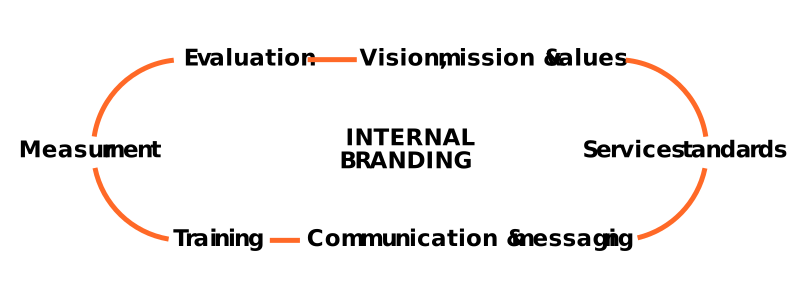
Internal Branding: It’s all in the name really. This relates to everybody inside the company. It is the connection that employees feel to the company, its mission and values.
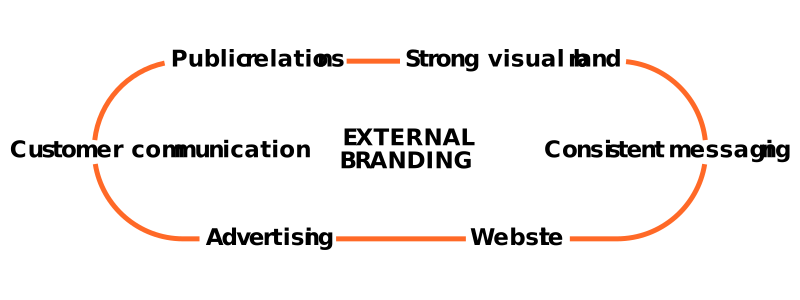
External Branding: This is the image that your company puts out to the world via all its marketing/communications channels. If this is strong it will attract new customers and business, as well as retaining the current client base.
So is one more important than the other?
The short answer is No! For the most effective growth of new customers is to aim to have a solid foundation in both. To have strong internal branding will help to strengthen the external branding and vice versa.
So how to ensure that both are strong and supporting each other. Below are some points.
Internal branding:
- Define your company’s mission and values. What are the principles that guide your business? What do you stand for?
- Communicate your mission and values to your employees. Make sure that everyone in the company knows the mission and values, and that they are aligned to them.
- Create a positive work environment. Providing a safe, healthy, and supportive workplace where employees feel valued and respected will help to boost employee loyalty and connection.
- Celebrate successes. When employees achieve something great, make sure to recognise and celebrate their success, give them pride in their work. And make sure that it’s not only just internal knowledge, share it with the world.
External branding:
- Develop a clear and consistent brand identity. So really, your company’s name, logo, colours, and tagline.
- Create marketing materials that communicate your brand message. This is your many channels of communications, so your website, brochures, advertising, and social media posts.
- Provide excellent customer service. This is where internal and external really meet. It’s one of the best ways to build a positive reputation for your company. And this can be affected by anyone from the first to the last point of contact (even if that last point of contact is a package or box).
- Get involved in your community. Show that you care about the people and places where you do business. It will make you appear authentic, which in this social media age, is critical.
Conclusion
So yes, both are important to get right in conjunction with each other to ensure that your reach, attraction and nurturing of prospects (and customers alike) helps to grow your business. Ready to bring your internal and external branding together? Get in touch with our team and we’ll help you find the perfect fit.
Event Kit Fulfilment Explained: How Brands Deliver Packs Without the Headache
Have you ever thought about the behind-the-scenes complexities of “simple” event kits? The ones with few branded items and some printed materials that are packed up and shipped out. On the surface, they look straightforward, but event kit fulfilment is actually one of the most operationally complex parts of running events at scale.
JSM have seen some companies face issues such as last-minute address changes across multiple regions, stock shortages just days before dispatch, inconsistent kits arriving at different locations, and teams manually packing hundreds of boxes under time pressure. The idea of event kits is great, but it’s the logistics behind delivering them properly that make them a success. When done well, event kit fulfilment and structured merchandise fulfilment services remove any friction and risk, and ensure every recipient gets the right experience. Done poorly, it creates stress, delays, and wastes budget.
What Is Event Kit Fulfilment?
Event kit fulfilment is the process of storing, assembling, and distributing pre-defined packs of branded materials to specific recipients, often across multiple locations, on a controlled timeline. It typically forms part of wider branded merchandise fulfilment and merchandising distribution operations, combining inventory management, pick-and-pack operations, shipping and logistics, and tracking and coordination.
Say you’re a company running multi-city events and need 500 identical event kits delivered to over 20 locations across the UK and Europe, all arriving within a 48-hour window before each event. Without structured event kit fulfilment, this would require manual packing, multiple shipping providers, and high-risk inconsistency. With a fulfilment solution, kits are pre-built and quality checked, stock is centrally stored, and deliveries are scheduled and tracked. The winning scenario is that you’ll have consistent kits across all locations, have reduced your internal workload, and have no last-minute issues.
What Goes Into an Event Kit?
Event kits vary widely depending on the use case, but most follow a similar structure with common components:
- Branded Merchandise: Apparel (t-shirts, hoodies), drinkware, bags or accessories
- Printed Materials: Event guides, flyers, agendas, and welcome letters
- Functional Items: Lanyards and badges, stationery, and tech accessories
- Packaging: Branded boxes, inserts, and protective materials
JSM know that the most effective kits are purpose-driven, consistent in quality and designed as a cohesive experience. What can go wrong is kits that include too many low-value items that lack consistency in branding and feel disjoined rather than curated. For brands looking for a premium output, overloading kits with cheaper items dilutes it instead of adding value.
The Challenges of Event Kit Fulfilment
Organisations face issues because fulfilment is more than packing boxes, it’s a whole logistical effort.
1. Multi-Location Complexity
Sending kits to a single location is manageable, but sending them to multiple offices, event venues and individual attendees introduces significant complexity. This is due to address accuracy, delivery coordination and regional shipping variations.
2. Timing and Deadlines
Event timelines can be unforgiving. If you have kits that have arrived late, they are unusable, too early, and you have storage issues. It’s important to keep on top of lead times, especially when multiple suppliers are involved.
3. Stock Management
Without proper systems, items run out unexpectedly, kits become inconsistent, and last-minute substitutions are required.
4. Manual Processes
Many businesses still rely on internal teams packing kits, spreadsheets for tracking and manual coordination with couriers. Not only is this time-consuming, but it’s also error-prone and not scalable in the long run.
How Fulfilment Solves This
Merchandise fulfilment services make a real difference because their centralised approach brings everything into one system. Products are stored centrally, kits are pre-defined and standardised, orders are processed through a single workflow, and distribution is managed consistently. Before, you may have dealt with multiple suppliers, fragmented processes, and high internal workloads. In practice, after fulfilment, you have one central operation and a streamlined process with predictable outcomes. With JSM, fulfilment is about removing barriers from the entire process. This includes planning kit configurations, managing stock levels and coordinating delivery schedules, providing both efficiency and certainty.
The Process: Step-by-Step
Understanding the process helps clarify where value is created.
- Storage: All items are delivered to a central warehouse, checked for quality and quantity, and logged into inventory systems for central storage that allows for operational insight over real-time stock visibility.
- Kit Assembly (Pick and Pack): Each kit is assembled based on predefined specifications, quality checked and packed consistently to ensure accuracy, consistency, and efficiency.
- Packaging: Packaging is critical for protecting items, enhancing presentation and reinforcing brand perception.
- Distribution: Kits are shipped to individual recipients or locations, tracked throughout delivery, and delivered within defined timeframes.
- Tracking and Reporting: A strong branded merchandise fulfilment setup includes delivery tracking, stock reporting, and order visibility.
Common Mistakes
Even well-planned campaigns can run into issues. Here are the most common pitfalls we see:
- Leaving Fulfilment Too Late: This is the biggest risk as you’re facing rushed packing, increased errors and higher costs. Our recommendation is to build fulfilment into planning from the start.
- Overcomplicating Kits: Too many items create packing complexity, higher costs, and increased risk of errors.
- Ignoring Stock Lead Times: Different products have different lead times. One delayed item can hold up the entire kit.
- Poor Address Data: Incorrect or incomplete addresses mean a delay in deliveries, increased costs and poor recipient experience.
- Underestimating Scale: What works for 50 kits doesn’t work for 500.
Benefits of Event Kit Fulfilment
When done properly, the benefits are significant to the output of your business:
- Efficiency: Reduced internal workload, faster processing, streamlined operations.
- Scalability: Whether you need 100 or 1,000 kits with multi-country fulfilment systems, scale with you.
- Consistency: Every recipient gets the same products, the same quality and the same experience.
- Reduced Risk: Fewer errors, better planning and more predictable outcomes.
Importantly, you’ll get a better brand experience because consistency and quality are key. Having confidence that your kit will arrive on time, the contents will be correct, and the experience will be consistent removes a huge amount of operational stress.
Fulfilment Is No Longer Optional
As events become more complex and distributed, event kit fulfilment is essential. Without it, processes become fragmented, errors increase, and your teams become stretched. Instead, turn to operations that are streamlined, outcomes that are predictable and brand experiences that are noted. JSM sees merchandise fulfilment services as a critical part of delivering successful campaigns, where every item arrives exactly as intended. Channel operational excellence by speaking to our team for more information.


